Brelo Press
01    Editorial Standards

Documenting the Process.

Brelo Press operates under the following editorial principles: articles are reviewed by at least one second editor before publication, sources are cited where appropriate, corrections are noted publicly, and writers disclose any commercial relationships that could influence their selection of subject matter.

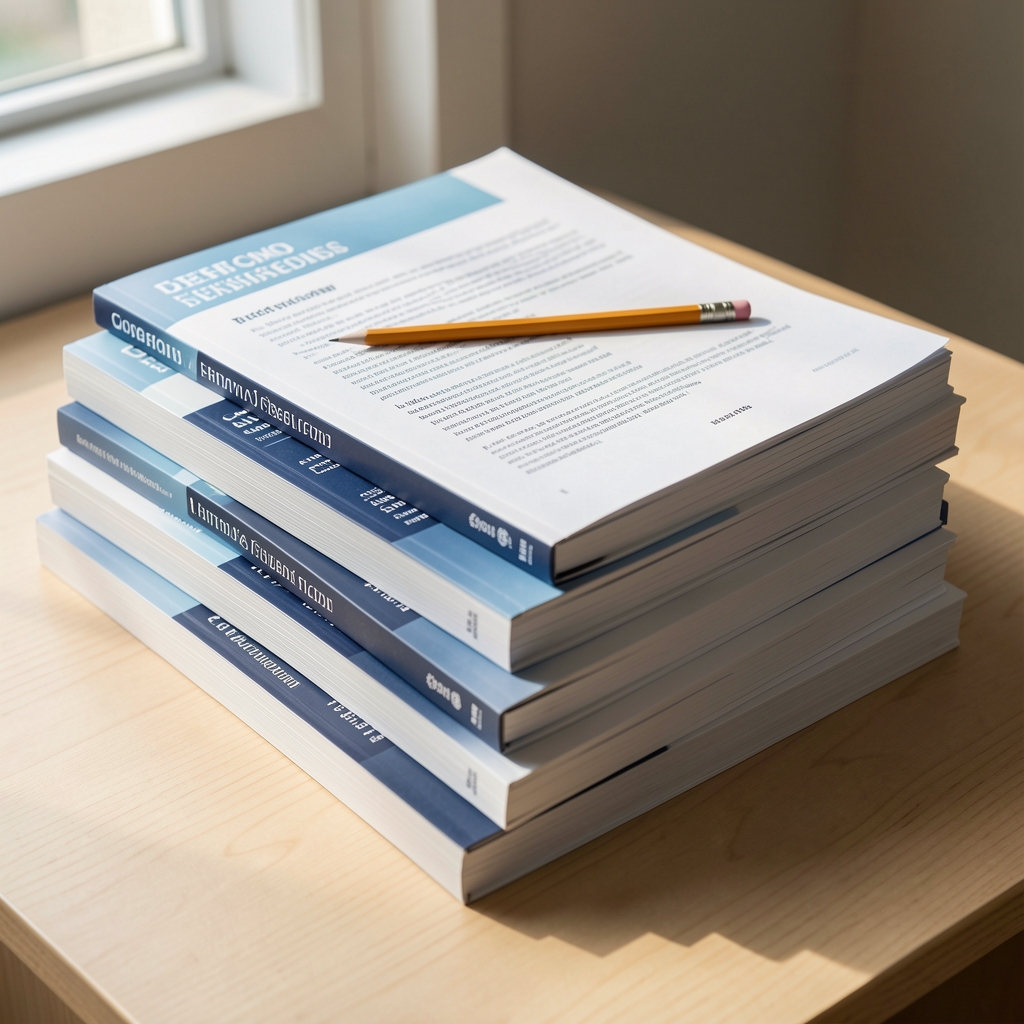
Stack of academic journals and printed research papers on a light wooden surface, natural daylight from the side, a pencil resting across the top
02    Our Approach

Every article begins with a question, not a conclusion.

The editorial process at Brelo Press starts from published nutritional research. Writers are assigned topics based on the current volume and quality of peer-reviewed evidence in a given area. Articles that lack a documented evidence base are declined at the proposal stage, regardless of how compelling the narrative framing appears.

This is not a constraint on good writing — it is a structural rule that prevents the publication from drifting toward speculation presented as established fact. The wellness publishing space generates significant amounts of content that conflates emerging research, anecdotal observation, and wishful interpretation. Brelo Press is designed to occupy a different position.

The tone is editorial and considered. Writers are expected to acknowledge uncertainty where it exists, to note the size and quality of studies they cite, and to distinguish between what the evidence demonstrates and what it suggests.

03    Publication Process
01

Topic Identification and Source Mapping

The editorial desk identifies candidate topics through a systematic review of recent publications in peer-reviewed nutritional science and exercise physiology journals. Topics with weak or highly contested evidence are held pending further research publication.

A source map — a structured list of primary references the article will draw on — is assembled before the writing brief is issued. Writers receive this map as part of their commission. They are expected to read and interpret the sources directly, not to summarise secondary commentary on them.

02

Writer Brief and Commercial Disclosure

Before beginning a draft, each contributor completes a brief disclosure form confirming that they hold no commercial interest in any product, supplement, service, or entity relevant to the article topic. This form is retained by the editorial desk.

Where a relevant commercial relationship exists but does not constitute a material conflict, it is disclosed at the foot of the article. Where a material conflict exists, the article is reassigned.

03

First Draft and Self-Review

The contributor produces a complete first draft of no fewer than 1,200 words for a standard feature. The draft includes inline references to primary sources at each factual claim point. The writer then self-reviews against a standardised checklist maintained by the editorial desk.

The checklist covers: accuracy of cited data, appropriate characterisation of study quality and limitations, absence of scope-overreach in claims, and vocabulary compliance with the publication's editorial standards.

04

Second-Edit Review

A second editor — one not involved in the original draft — reviews the article against the source map. This editor independently verifies three to five of the most significant factual claims by returning to the primary source. They also assess tone, scope, and vocabulary compliance.

The second editor's notes are returned to the writer for incorporation. Where disagreements between writer and second editor cannot be resolved, the matter is referred to the lead editor. Articles are not published while substantive factual disputes remain open.

05

Publication and Archiving

Once both editors have signed off, the article is formatted for publication. The publication date and version number are recorded in the internal archive alongside the source map, the disclosure form, and the second-edit notes.

This archival record is maintained for a minimum of three years from publication date. It allows the editorial desk to reconstruct the evidence basis for any published claim if a correction request is received.

06

Corrections and Updates

When a factual error is identified — by a reader, a cited source, or the editorial team — the correction is appended to the article with a visible date stamp. The specific error and its correction are described plainly. The original erroneous text is not removed silently.

Corrections to substantial factual claims trigger a re-review of the surrounding paragraphs to assess whether related claims are also affected. Requests for corrections may be submitted via the contact form.

04    Source Standards
Accepted Sources
  • Peer-reviewed journal articles published in indexed nutritional science, exercise physiology, or related fields
  • Systematic reviews and meta-analyses with documented inclusion criteria and methodology notes
  • Official nutritional guidelines from established national bodies (cited as institutional positions, not as absolute truth)
  • Registered dietitian or nutritional researcher commentary, clearly attributed and contextualised
Used with Caution
  • Single small-sample studies — cited only when described accurately as preliminary and when no contradicting evidence exists
  • Animal model research — referenced only to indicate mechanistic plausibility, never as a direct substitute for human data
  • Pre-print research — flagged explicitly as pre-publication and subject to revision upon peer review
Not Accepted
  • Manufacturer-funded research presented without disclosure of the funding relationship
  • Testimonials or anecdotal accounts used as evidence of general effect
  • Influencer or social content as primary evidence
  • Research from journals identified as predatory or operating without robust peer-review processes
05    Scope

What Brelo Press covers — and what it does not.

The publication focuses exclusively on the relationship between lifestyle factors and metabolic health. Core subjects include basal metabolic rate, resting metabolism, adaptive thermogenesis, nutrient partitioning, meal timing, the thermic effect of food, metabolic flexibility, and the role of muscle mass in long-term energy expenditure.

Brelo Press does not cover weight-loss products, supplement recommendations, specific eating regimes in prescriptive terms, or any subject that would require the publication to venture into territory better handled by qualified nutrition professionals or the published guidelines of national health bodies.

Content published on Brelo Press is selected based on published nutritional research and undergoes independent batch verification for quality and labelling accuracy where applicable.

06    What We Are Not

An independent editorial publication, not an advisory service.

Brelo Press is an independent editorial publication focused on everyday wellness practices. The publication is not affiliated with any commercial, governmental, or institutional body.

Articles published on Brelo Press are editorial in nature and reflect the writers' observations on everyday wellness practices. The content is not intended as professional advice, nor as guidance for the management of any specific condition.

We recommend speaking with a qualified wellness or nutrition professional before introducing any new habit or routine to your daily life, particularly if you have specific dietary requirements. The editorial desk does not respond to requests for personalised guidance.

Editorial review in progress — two printed article drafts side by side on a desk, one marked with a blue pen, morning light, controlled workspace
07    A Note on Certainty
“The most reliable editorial work in nutritional science is the work that knows what it does not know.”

Metabolic research is an active field. What is well-established today — the central role of lean tissue in resting energy expenditure, for instance — was contested twenty years ago. What is contested today may be settled, in either direction, by the time you read this. Brelo Press aims to represent the current state of evidence accurately, including its uncertainties, rather than smoothing over complexity to produce a cleaner narrative.